





November is National Diabetes Month, and it’s a good time to talk about how diabetes affects your gums.
Diabetes and gum disease are closely connected. High blood sugar can make gum disease more likely and more severe, and gum disease can make blood sugar harder to control. Treating gum disease early matters, and for many patients, the idea of gum surgery is what keeps them from getting care.
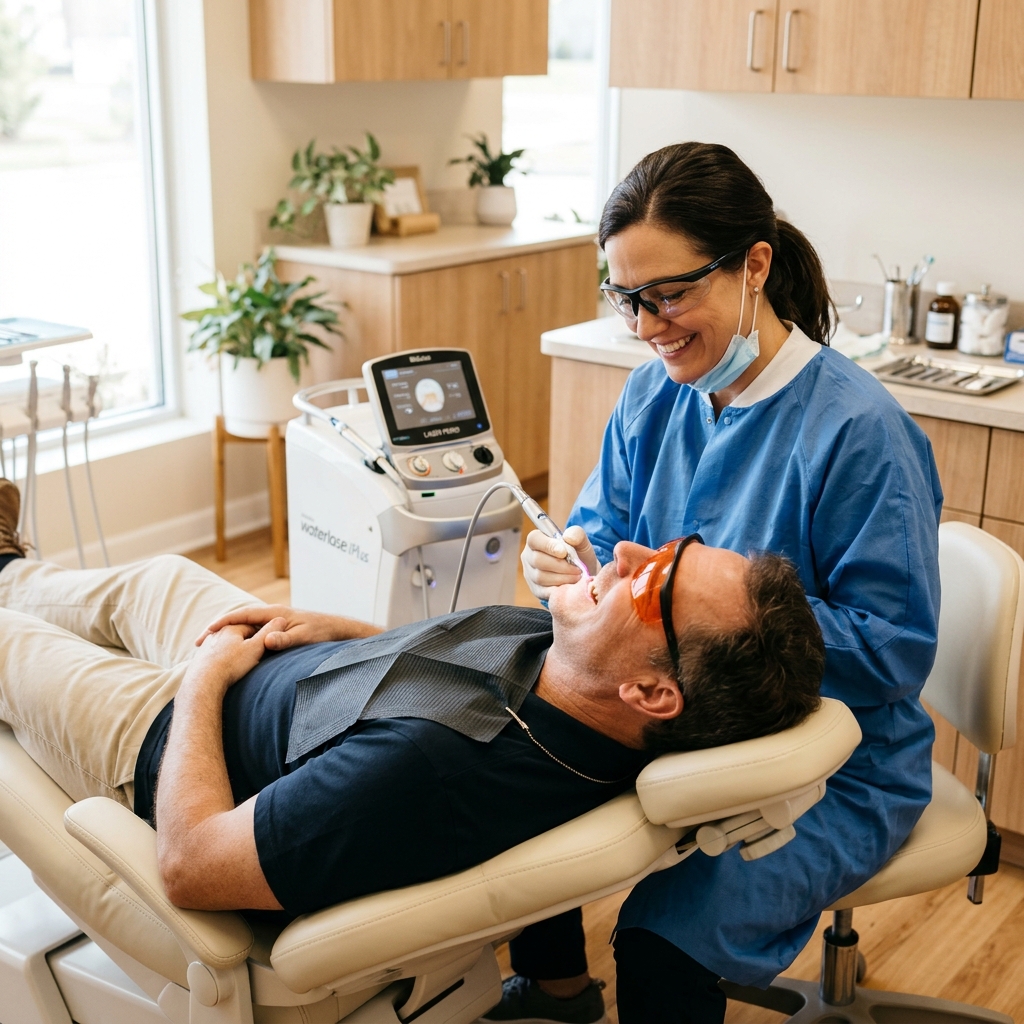
At Jenkins Family Dentistry in Floyds Knobs, laser periodontics offers a gentler option, with little to no cutting or stitches. Here’s what patients in Floyds Knobs, New Albany, and Louisville should know.
How Diabetes and Gum Disease Affect Each Other
According to the National Institute of Diabetes and Digestive and Kidney Diseases (NIDDK), high blood glucose can cause glucose to build up in your saliva, which feeds the bacteria that form plaque. If plaque isn’t removed, it can harden into tartar and lead to gum disease. NIDDK also notes that high blood glucose increases the risk that gum disease will progress from mild to severe, and that some mouth problems can make diabetes worse.
The American Diabetes Association explains that people with diabetes are at higher risk for gingivitis and periodontitis, and that the inflammatory response can be stronger when diabetes targets aren’t being met.
The good news: according to the CDC, “Treating gum disease significantly improves blood sugar level (glycemic control) among people with diabetes.”
Signs of Gum Disease to Watch For
Our dental cleaning page notes that gum disease can cause swelling, bleeding gums, bad breath, and even tooth loss if left untreated. NIDDK adds that gums pulling away from your teeth and loose teeth are also warning signs.
What Is Laser Periodontics?
Laser periodontics uses a specialized dental laser to treat gum disease. It’s a minimally invasive therapy with little to no cutting or sutures. The laser removes diseased tissue and bacteria with precision, and the root surfaces are cleaned to help your gums reattach.
How Treatment Works
- Consultation and mapping. Your dentist reviews your symptoms, measures gum pocket depths, and takes images to find areas of active infection.
- Treatment planning. We create a plan that targets specific areas for laser therapy and cleaning.
- Laser therapy and deep cleaning. The laser removes diseased tissue and bacteria, and root surfaces are cleaned.
- Stabilization and follow-up. We check your comfort, give you home care guidance, and schedule follow-up visits.
Benefits of Laser Gum Treatment
- Reduced bleeding and swelling during and after care
- Precise targeting that preserves healthy tissue
- More comfortable visits and a smoother recovery
- Support for long-term gum health with routine maintenance
Who Is a Good Candidate?
Laser therapy may be recommended if you have bleeding or swollen gums, deep gum pockets, or gum disease that hasn’t improved with cleanings alone. It’s used for gingivitis, periodontitis, inflamed or bleeding gums, deep periodontal pockets, gum recession sites, and localized periodontal abscesses. Your dentist will confirm with an exam and measurements.
What Recovery Looks Like
Most patients have minimal discomfort and get back to normal activities quickly. For a day or two after treatment:
- Eat soft foods and clean gently.
- Avoid toothpicks and hard foods near treated areas.
- Avoid smoking and alcohol during early healing.
Long-term success depends on good home care and regular maintenance visits.
Tips for Patients With Diabetes
- Tell your dentist about your diabetes. NIDDK recommends sharing how long you’ve had diabetes, the medicines you take, and any changes in your blood sugar.
- Be honest about your targets. The American Diabetes Association encourages patients to tell their dentist whether they’ve been meeting their diabetes targets.
- Keep up with cleanings. Most patients benefit from professional cleanings every six months, and some need them more often.
Not Sure About a Treatment Plan You Were Given?
If another office has recommended gum surgery, Jenkins Family Dentistry offers free second opinions. Bring your recent X-rays and treatment plan, and we’ll talk through your options.
Schedule Your Gum Evaluation
Jenkins Family Dentistry is located at 750 Highlander Point Dr in Floyds Knobs and welcomes patients from Floyds Knobs, New Albany, Greenville, and Louisville. Many Louisville patients cross the bridge for our care. Call (812) 923-2200 or contact us to schedule.
Frequently Asked Questions
People with diabetes are at higher risk. High blood glucose can cause sugar to build up in saliva, which feeds the bacteria that form plaque and lead to gum disease.
The CDC reports that treating gum disease significantly improves blood sugar control in people with diabetes.
Laser periodontics is minimally invasive, with little to no cutting or sutures.
Most patients have minimal discomfort, and any soreness is usually mild and short-lived.
Most people return to normal activities quickly. Soft foods and gentle cleaning are recommended for a day or two.
It may be recommended if you have bleeding or swollen gums, deep pockets, or gum disease that hasn’t improved with cleanings alone. An exam will confirm.