



If you have been researching dental implants, you have probably encountered prices that vary by thousands of dollars. One advertisement promotes an affordable “implant,” while another quotes a figure several times higher for what looks like the same treatment.
The difference is almost always what the advertised price includes.
Replacing one tooth typically involves an implant post, an abutment and a custom crown. Replacing a full arch involves a set of implants and one fixed prosthesis, priced per arch rather than per tooth. Many patients also need an extraction, bone graft, temporary tooth or other preparatory care.
That is why the most accurate dental implant price comes from a personalized treatment plan, not a generic online estimate.
At Jenkins Cosmetic and Family Dentistry, patients from Floyds Knobs, New Albany, Greenville and surrounding Southern Indiana communities can begin with a free dental implant consultation. This visit is an opportunity to understand your options, ask questions and receive a clearer picture of the complete cost.
How Much Does a Dental Implant Cost in Indiana?
There is no single price that applies to every implant patient.
A 2024 national procedural cost study published by CareCredit reported an average of approximately $1,903 for a single-tooth dental implant in Indiana. That figure represents the implant post and placement process. It specifically excludes the crown, tooth extraction and office-related fees.
That distinction matters. A low advertised implant price may cover only the part placed in the jawbone, not the final tooth you will use to chew and smile.
Your complete treatment cost may include:
- Consultation and examination
- Digital imaging or scans
- Tooth extraction, if necessary
- Bone grafting or other site preparation
- The dental implant post or posts
- Implant placement
- A temporary tooth or provisional arch, when appropriate
- The abutment or connecting components
- A custom crown, bridge, denture or full-arch prosthesis
- Follow-up visits
- Sedation or additional comfort options
- Long-term maintenance
The only reliable way to determine your cost is to evaluate the condition of your mouth and identify every treatment stage involved.
The American Academy of Implant Dentistry advises patients to be cautious about receiving an implant price before an examination. Implant treatment is customized, so the number of missing teeth, implant type, location and need for additional procedures all affect the final estimate.
Understanding the components makes it easier to compare prices.
1. Implant Post
The implant is a small post placed in the jawbone to function like an artificial tooth root. Most implant systems use titanium or another biocompatible material.
2. Abutment
The abutment connects the implant post beneath the gums to the visible restoration above it.
3. Final Restoration
The restoration may be a crown for one missing tooth, a bridge for several teeth, or a full-arch prosthesis supported by multiple implants.
The U.S. Food and Drug Administration explains that implant systems include an implant body and abutment, with an artificial tooth or prosthesis attached above them.
When comparing estimates, ask whether all three portions are included.
Which Implant Treatment Do You Actually Need?
Most patients arrive assuming they need one implant for every missing tooth. That is rarely the case.
Implant treatment falls into three general categories, and the category you fall into drives your cost far more than any other factor.
| Your situation | Typical treatment | How it is priced |
|---|---|---|
| One missing tooth | Single implant and custom crown | Per tooth |
| Several missing teeth in a row | Implant-supported bridge | Per bridge, using fewer implants than teeth |
| Most or all teeth missing in an arch | All-on-4®, All-on-X or implant-retained dentures | Per arch |
A patient missing eight teeth does not necessarily need eight implants. A patient missing an entire arch almost certainly does not need fourteen.
All-on-4®, All-on-X and Same-Day Teeth: Full-Arch Implant Options
If you are missing most or all of the teeth in an arch, full-arch treatment replaces the entire upper or lower arch using a small number of implants that support one fixed prosthesis.
This is the category most patients are searching for when they look up All-on-4, All-on-X, full mouth dental implants, teeth in a day or same-day dental implants.
What Does All-on-X Mean?
All-on-X is the umbrella term for full-arch implant treatment in which a complete set of teeth is supported by a set number of implants. The “X” stands for the number of implants used in that arch.
The most common versions are All-on-4, which uses four implants, and All-on-6, which uses six. The right number depends on your bone volume, bite forces, arch shape and the type of prosthesis planned. That number is determined during imaging and treatment planning, never before an examination.
What Is All-on-4®?
All-on-4® is a full-arch treatment concept that uses four strategically positioned dental implants to support an entire arch of replacement teeth.
Two implants are typically placed toward the front of the jaw, where bone is usually denser, and two are angled toward the back. That angled positioning can make better use of existing bone and may reduce or eliminate the need for bone grafting in some cases.
The result is a fixed prosthesis. It is secured to the implants rather than resting on the gums, and it is not removed by the patient at night.
You can review the practice’s approach on the All-on-4® page.
What Are Same-Day Teeth, or Teeth in a Day?
Same-day teeth means a fixed provisional set of teeth may be attached on the same day your implants are placed, so you do not leave the office without teeth.
Qualifying patients at Jenkins may receive a fixed provisional restoration the day of implant surgery. This requires adequate implant stability and other clinical criteria that are confirmed during the procedure itself.
Two points matter here, and advertising rarely makes them clear:
- The teeth placed that day are provisional, not final. Your custom permanent prosthesis is made after the implants have integrated with the jawbone.
- Same-day teeth are not available to everyone. Bone quality, gum health, active infection, bite forces and medical history all factor into eligibility.
Same-day teeth is a different service from immediate single-tooth implant placement, which is covered further down.
How Is All-on-4® Different From a Denture?
There are three distinct options, and they are frequently confused in advertising.
- Traditional removable dentures rest on the gums, are held by suction or adhesive, and are removed daily.
- Implant-retained dentures, sometimes marketed as snap-in dentures, attach to implants for stability but are still removed by the patient for cleaning.
- All-on-4® and other fixed full-arch prostheses, including hybrid dentures, are secured to the implants and are removed only by your dentist.
Stability, cost and daily care differ across all three. So does the amount of bone required.
How Does Full-Arch Cost Compare to Single Implants?
A full-arch case costs more than one implant and crown, but considerably less than replacing every missing tooth with an individual implant.
When comparing full-arch quotes, confirm whether the estimate includes:
- All implants in the arch
- Extraction of any remaining teeth
- Bone grafting or site preparation, if needed
- The provisional set of teeth
- The final custom prosthesis and its material
- Which arch is quoted, upper, lower or both
- Follow-up visits and long-term maintenance
A per-arch price that excludes extractions or the final prosthesis is not a complete number. Always ask which arch the quote covers.
What Affects the Cost of Dental Implants?
Several clinical and logistical factors determine the total.
Number of Missing Teeth
Replacing one tooth generally costs less than restoring several missing teeth or a full arch. However, replacing multiple teeth does not always require one implant per tooth.
An implant-supported bridge may use a smaller number of implants to support several replacement teeth. Patients missing most or all of an arch may qualify for full-arch treatment supported by strategically positioned implants.
Tooth Location
Front teeth often require detailed cosmetic planning because their shape, color and gumline are highly visible. Back teeth must withstand stronger chewing forces.
Location can affect the implant size, restoration design and complexity of placement.
Tooth Extraction
If a damaged tooth remains in place, it may need to be removed before the implant can be placed.
In some cases, extraction and implant placement occur during the same appointment. Other situations require healing before the next stage begins. Full-arch cases often involve removing several remaining teeth, which should appear in the estimate.
Bone Grafting
A dental implant needs adequate bone for support. Bone can shrink after a tooth has been missing, particularly when the space has been empty for an extended period.
If there is not enough bone, grafting may be recommended to strengthen the area. The type and extent of grafting affect both the cost and the treatment timeline.
Gum Health
Active gum disease can affect the tissues and bone that support an implant. Periodontal treatment may be necessary before placement.
Implant Type and Restoration
A single implant crown, an implant-supported bridge and a full-arch prosthesis are different treatments with different materials, planning requirements and costs.
Prosthesis material matters as well. Full-arch restorations can be made in different materials, and the selection affects appearance, durability and price.
Digital Planning and Surgical Guides
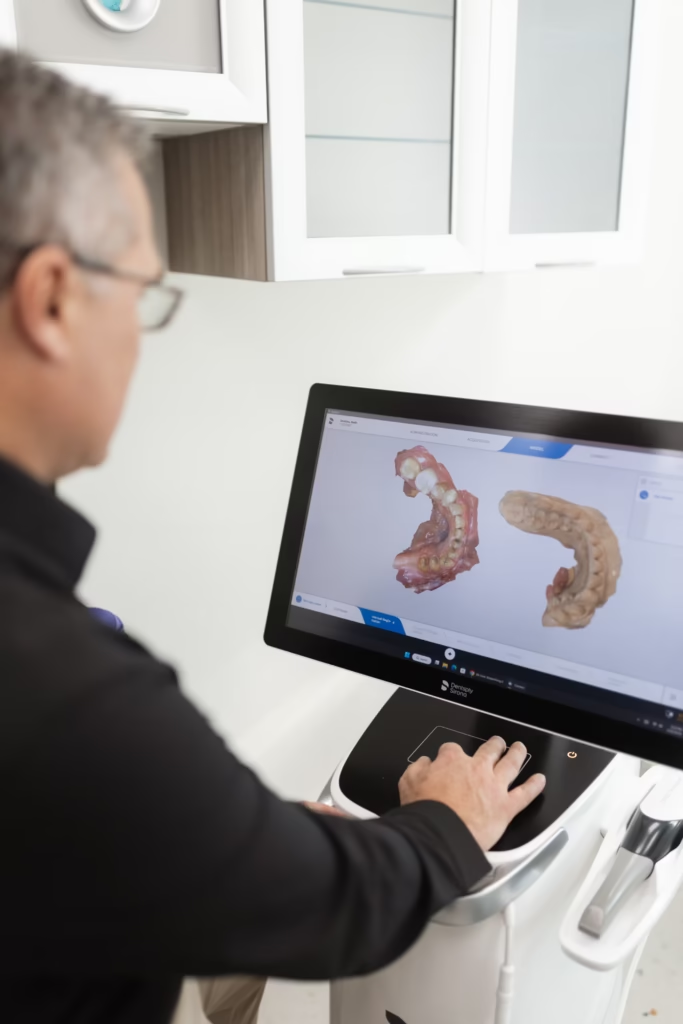
Jenkins uses modern digital technology to evaluate the mouth and plan treatment. Digital scans and three-dimensional guides can support more precise implant positioning, which is especially important in full-arch cases where several implants must work together.
The practice also operates a fully digital in-house lab, which keeps more of the restorative process under one roof.
Sedation and Comfort Options
Local anesthesia is commonly used during implant placement. Additional comfort or sedation options may affect the overall treatment cost when appropriate. Full-arch surgery is a longer appointment, so sedation is discussed more often in these cases.
Case Complexity
Previous dental work, limited space, bite problems, sinus anatomy and medical considerations can make treatment more involved.
What Happens at Your Free Implant Consultation?
The consultation is designed to answer two essential questions:
- Are dental implants appropriate for you?
- What would your complete treatment involve?
Here is what you can generally expect.
A Conversation About Your Goals
The team will ask what is bothering you and what you hope to change.
You may be looking to replace one missing tooth, stabilize loose dentures, chew more comfortably or replace a failing arch entirely. Your priorities help guide the treatment recommendation.
A Review of Your Health History
Overall health can influence implant healing. Be prepared to discuss:
- Current medications
- Medical conditions
- Previous surgeries
- Tobacco or nicotine use
- History of gum disease
- Teeth grinding or clenching
- Previous dental implants
- Current dentures or bridges
The FDA notes that overall health, smoking and oral hygiene can affect healing and long-term implant success.
An Examination of Your Teeth and Gums
The dentist will examine the missing-tooth area, surrounding teeth, gums and bite.
A strong implant plan must account for more than the empty space. The final teeth need to fit comfortably with the opposing arch and complement the rest of the smile.
Digital Imaging and Treatment Planning
Jenkins may use digital imaging and scans to assess available bone and plan implant positioning. The practice’s dental implant process begins with reviewing your goals, examining your mouth and mapping a personalized approach.
Three-dimensional imaging is what determines whether full-arch treatment is possible, how many implants your arch can support and whether grafting is required.
When scheduling, ask the team to confirm which diagnostic images are included in the current free consultation offer.
A Discussion of Your Options
Not every missing tooth has only one solution. Depending on your needs, the dentist may discuss:
- A single implant and crown
- An implant-supported bridge
- All-on-4® or All-on-X full-arch implants
- Same-day teeth, when you qualify
- Fixed hybrid dentures
- Implant-retained dentures
- A conventional bridge
- Traditional removable dentures
- Delaying treatment while preparing the area
The goal is to explain the advantages, limitations and responsibilities of each option.
A Personalized Cost Estimate
Once the necessary treatment stages are identified, the team can provide a more meaningful estimate.
The plan should explain:
- Which procedures are included
- How many implants are recommended
- Whether full-arch treatment is recommended, and for which arch
- Whether extraction or grafting is necessary
- What type of final restoration is planned
- Whether a provisional or temporary tooth is included
- Which services may qualify for insurance benefits
- What financing options are available
- The anticipated sequence of treatment
Do not hesitate to ask whether the estimate includes the implants, the connecting components, the final restoration and follow-up care.
Can You Receive an Implant or Teeth the Same Day?
Sometimes, but not always.
Immediate single-implant placement may be possible when the area has adequate bone and no condition makes delayed placement safer. Other patients benefit from allowing the extraction site or bone graft to heal first.
Even when the implant is placed immediately, the permanent crown may not be attached that day. The implant often needs time to integrate with the jawbone before supporting the final restoration.
Full-arch patients ask a related question: can an entire arch be completed in one day? For qualifying All-on-4® and All-on-X cases, extractions, implant placement and a fixed provisional arch can be completed in a single surgical appointment. The permanent prosthesis is delivered after healing.
Jenkins provides both implant surgery and implant restorations, allowing the team to plan placement, healing and the final teeth as connected parts of the same treatment.
How Long Does Dental Implant Treatment Take?
The timeline varies according to the condition of the treatment site.
A typical process includes:
- Consultation and planning
- Extraction or grafting, if necessary
- Implant placement
- Healing and integration
- Abutment and final restoration
- Follow-up care
The implant may require several months to bond with the jawbone. A case involving grafting may take longer, while some straightforward cases progress more quickly.
Full-arch treatment follows the same sequence, with one practical difference: qualifying patients wear a fixed provisional arch throughout the healing phase rather than going without teeth.
A longer timeline does not mean something has gone wrong. Healing time is part of creating a stable foundation.
Does Dental Insurance Cover Implants?
Coverage depends on your plan.
Some policies exclude implant placement but provide benefits toward the crown, extraction or another portion of treatment. Other plans include partial implant coverage but apply deductibles, annual maximums or waiting periods.
Full-arch cases frequently exceed annual maximums, so ask whether treatment can be sequenced across benefit years when clinically appropriate.
Jenkins accepts many major dental plans and assists patients with claim submission. The practice’s insurance and financial policy lists plans including Delta Dental, Guardian, Humana, MetLife, Ameritas, Cigna Dental, Renaissance Dental, Aetna and Careington.
The team can help estimate benefits, but the insurance company makes the final coverage determination.
Financing Dental Implant Treatment
Jenkins accepts cash, checks and major credit cards. CareCredit financing is also available, subject to credit approval.
Financing may allow qualified patients to divide treatment costs into monthly payments instead of paying the entire balance at once. Ask the team to explain available terms and estimated payments before beginning treatment.
Health savings accounts and flexible spending accounts may also be used for qualifying dental expenses. Confirm eligibility with your plan administrator.
Questions to Ask at Your Consultation
Bring a list of questions so you leave with the information needed to make a confident decision.
Consider asking:
- Am I a good candidate for dental implants?
- Do I have enough bone?
- Will I need an extraction or bone graft?
- How many implants do you recommend?
- Am I a candidate for full-arch treatment such as All-on-4®?
- Will I leave with teeth the day of surgery?
- What type of restoration will be attached, and in what material?
- Are the implants, components and final restoration included in the estimate?
- Which arch does this estimate cover?
- How long will the complete process take?
- What happens if an implant does not integrate?
- What insurance benefits may apply?
- What financing options are available?
- How should I care for my implants long term?
A consultation should provide understandable answers without pressuring you into treatment before you are ready.
Schedule Your Free Dental Implant Consultation in Floyds Knobs
Missing teeth can affect eating, speaking and confidence, but you should not have to choose a treatment without understanding the process or the price.
Dr. Chris Jenkins, Dr. Paul Ranney and the team at Jenkins Cosmetic and Family Dentistry provide personalized implant planning for patients throughout Floyds Knobs, New Albany, Greenville and Southern Indiana, from a single missing tooth to full-arch All-on-4® treatment.
Call (812) 923-2200 to schedule your free dental implant consultation at 750 Highlander Point Drive, Floyds Knobs, IN 47119.
Frequently Asked Questions
Not always. Some prices include only the implant post or surgical placement. Ask whether the quote includes the implant, abutment, crown, imaging and follow-up care.
All-on-X is the general term for full-arch implant treatment. All-on-4 is the version that uses four implants per arch, and All-on-6 uses six. The number recommended for you depends on your bone, bite and prosthesis design, and it is determined during treatment planning.
Yes. Jenkins Cosmetic and Family Dentistry provides All-on-4® and other full-arch implant options, along with implant-retained and hybrid dentures. Both surgical placement and the final restoration are completed by the practice.
Often, yes. Qualifying patients receive a fixed provisional set of teeth on the day of surgery. That provisional is replaced with a custom permanent prosthesis after the implants integrate with the jawbone. Eligibility is confirmed during planning and surgery.
Full-arch treatment is quoted per arch, and the total depends on extractions, grafting, the number of implants and the prosthesis material. A free consultation with imaging is the only way to receive an accurate All-on-4® estimate rather than a generic advertised price.
Possibly. The angled implant positioning used in the All-on-4® concept can help some patients avoid grafting, but it does not remove the need for bone in every case. Three-dimensional imaging determines whether grafting is required.
Implants may have a higher initial cost, but the comparison depends on how many teeth are missing, whether neighboring teeth need treatment and the expected maintenance of each option.
After the necessary examination and planning, Jenkins can explain the recommended treatment stages and provide a personalized estimate. Additional diagnostics may sometimes be needed before every detail is finalized.
Not every patient needs grafting. It may be recommended when the jaw does not have enough healthy bone to support the implant predictably.
No. The consultation is for evaluation, education and planning. Treatment costs are discussed before procedures begin. Ask the office to confirm the current offer’s terms and included diagnostic services.
Yes. Implant-retained and hybrid dentures can provide greater stability than conventional removable dentures for qualifying patients.